LIVE STREAM: November 18–20, 2026 | 8:30 AM–4:00 PM (Saskatoon, SK)
Please adjust your start time according to your specific time zone.
ON-DEMAND ACCESS: Recorded footage and course content, including certificate, videos and quiz, will be available until January 4, 2027. Please allow 3–10 business days for footage to be processed.
Extensions cannot be granted under any circumstances.
Day Two — November 19, 2026
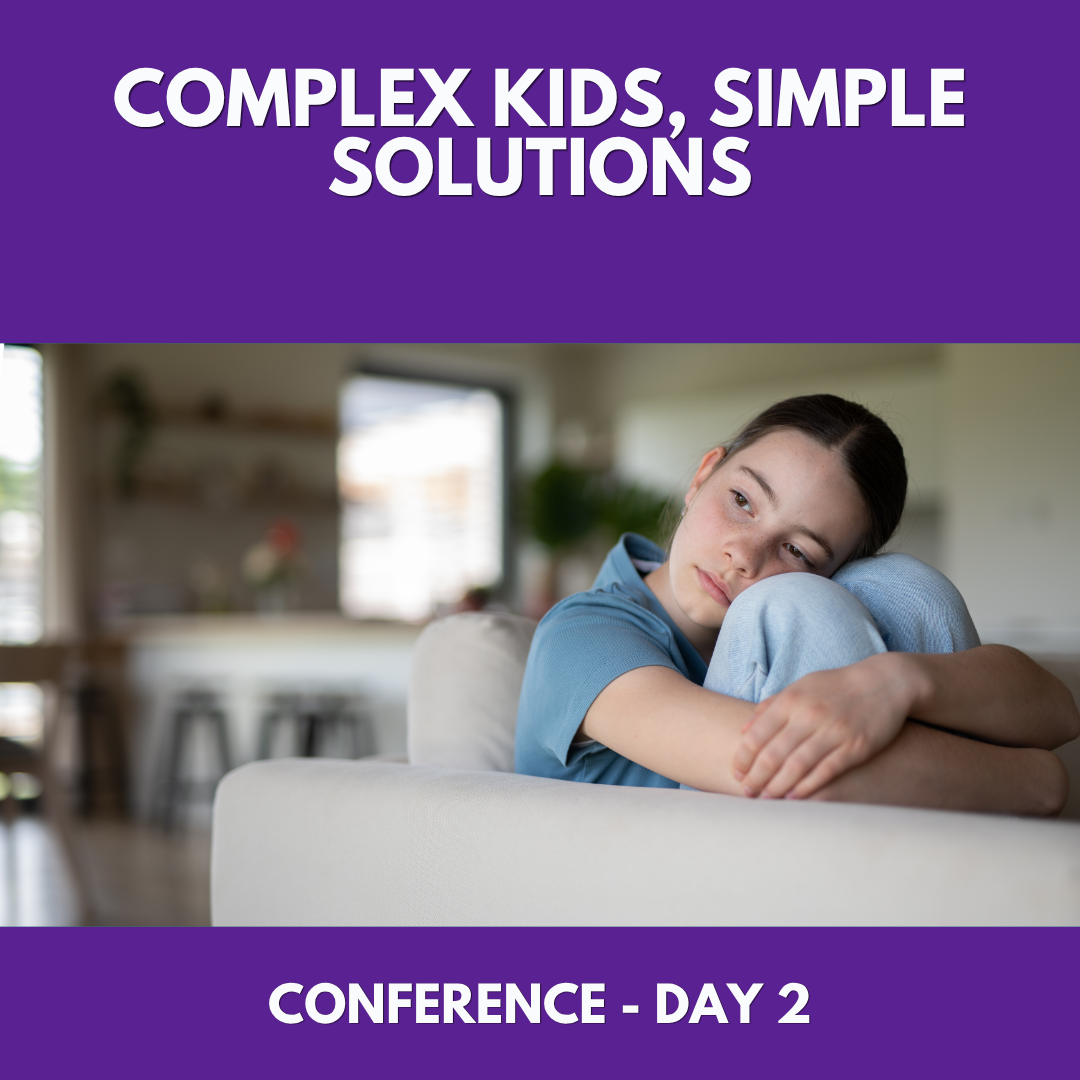
Complex Kids, Simple Solutions: Tips for Managing Dysregulated Students
Presented by Jenny Demark, Ph.D., C. Psych.
Students with chronic self-regulation difficulties are some of the most complicated, challenging, and rewarding to work with. Complex Kids, Simple Solutions is an evidence-based framework that is guided by developmental psychology and the science of learning. It is not easy. But it is simple. And it’s based on three fundamental ideas: Prepare, Teach, and Motivate.
Whether the student has a diagnosis of ADHD, ASD, DMDD, ODD, or is just giving teachers a good run for their money, there are solutions. This workshop will explain how three fundamental ideas apply to almost any situation teachers may encounter, from the mundane to the meltdown, and how they are especially useful when working with dysregulated kids.
Three fundamental strategies:
- Prepare: Plan ahead, be strategic, pick the right battles, and set the stage for success.
- Teach: Identify and directly teach the skills students are lacking.
- Motivate: Use effective motivation strategies to strengthen skills and decrease unwanted behaviours.
Prepare
Prepare yourself and prepare your student. Plan ahead and be strategic. Pick the right battles upfront. Set the stage for success. One of the single best proactive strategies available to teachers is to spend Quality Time building and maintaining a strong connection with their student.
The second fundamental is to directly Teach students the skills they are lacking. Shifting away from a “bad behaviour” paradigm, this approach refocuses teachers to understand misbehaviour in terms of missing skills. Many challenges arise because a child does not have a specific skill, be it co-operation, accepting being told no, or waiting their turn.
Finally, the third fundamental is to Motivate. Motivation can be used to improve skills such as using manners, remaining in their seat, and co-operating with requests. It can also be used to decrease unwanted behaviours such as tantrums and defiance. Spoiler alert: this approach promotes the use of rewards over punishments to motivate children.