Working with Children and Youth who are High-Risk, Marginalized and Engage in Self-Harming Behaviour

$169.00

6 Hours  |   Pre-approved for CEU’s

Presenter
Caroline Buzanko, Ph.D., R. Psych
Date
December 3, 2026
somdn_product_page
Virtual Registration Only

This page is for virtual attendance only. Your registration includes access online via live webinar and/or on-demand recording.

To attend this event in person, please register through our In-Person Events website.

Register to Attend
In-Person
In-Person Conference Registration

LIVE STREAM: December 3, 2026 | 8:30 AM–4:00 PM (Winnipeg, MB)

Please adjust your start time according to your specific time zone.


ON-DEMAND ACCESS: Recorded footage and course content, including certificate, videos and quiz, will be available until January 11, 2027. Please allow 3–10 business days for footage to be processed.

Extensions cannot be granted under any circumstances.

Conference Schedule

Day Two — December 3, 2026

Workshop 2

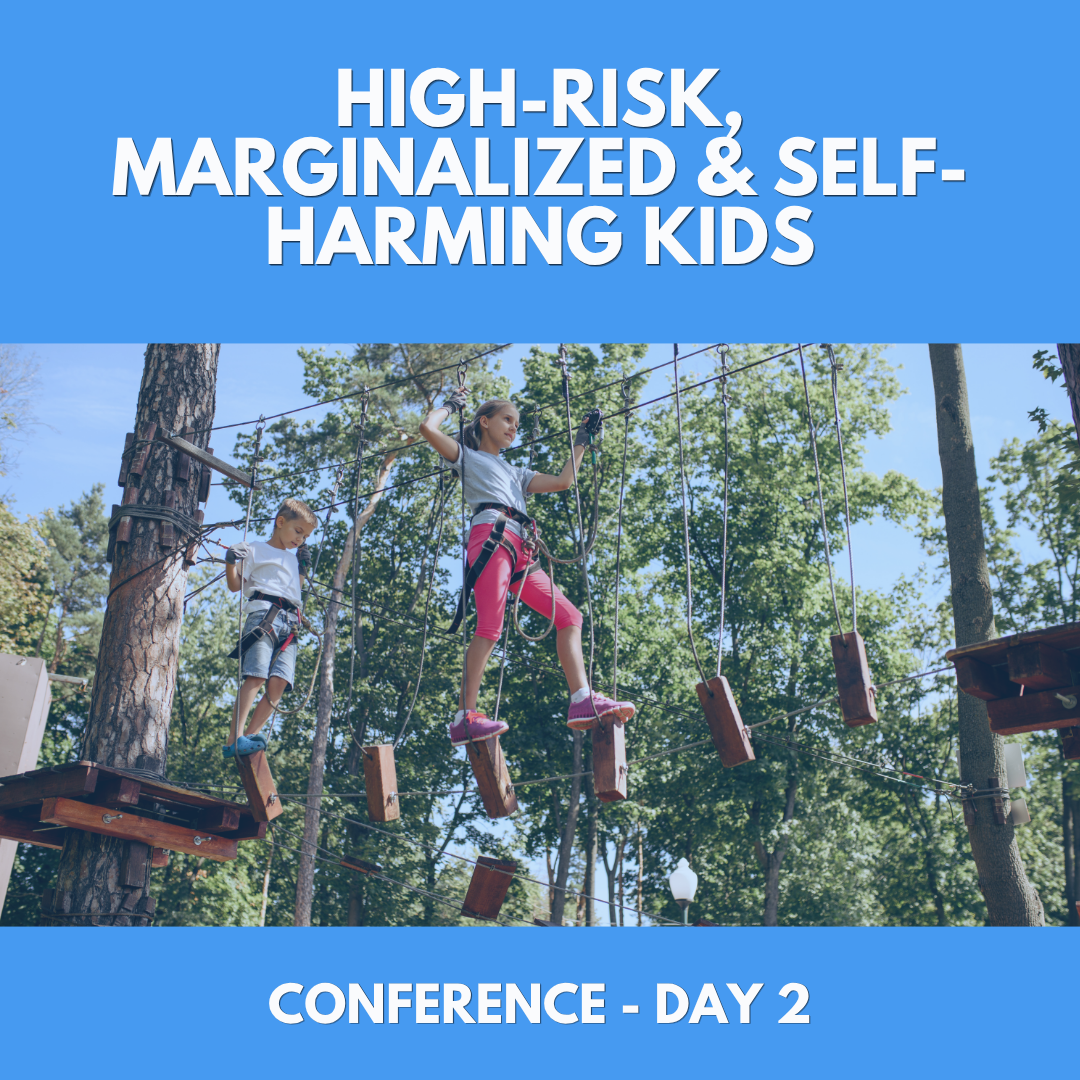
Working with Children and Youth who are High-Risk, Marginalized and Engage in Self-Harming Behaviour

Presented by Caroline Buzanko, Ph.D., R. Psych.

For anyone who know that “safety contracts” don’t work and want to know what does. Self-harm among youth isn’t rising because young people are more fragile. It’s rising because the conditions they’re navigating create psychological states where harming one’s own body makes functional sense. This intensive 6-hour workshop is designed for anyone who work with the youth carrying the heaviest burdens: those at the intersection of marginalization, trauma, and self-injury.

You’ll move beyond risk management checklists to understand the why beneath the behaviour. Drawing on the established theories and evidence-based interventions for self-harm, this training provides the clinical precision needed when the stakes are highest.

Key areas of focus:

  • Understanding the factors underlying self-harming behaviour
  • Structuring engagement that honours adolescent autonomy
  • Using chain analyses to identify meaningful intervention points
  • Teaching physiological regulation skills when cognitive strategies are ineffective
  • Balancing family involvement with appropriate confidentiality
  • Adapting evidence-based approaches for marginalized youth

This workshop addresses the reality that therapy fails when it replicates the same power dynamics that harm youth in the first place. You’ll learn how to structure engagement that honours adolescent autonomy, conduct chain analyses that reveal intervention points invisible in standard assessments, and teach physiological regulation skills that work when cognitive strategies fail.

Navigating complex therapeutic relationships

The workshop examines specific challenges in adolescent treatment, including involving parents while maintaining appropriate confidentiality, validating distress without reinforcing unhelpful patterns, and adapting evidence-based protocols for youth who experience standard therapeutic language as minimizing or unhelpful.

The workshop also addresses the relational demands of this work, including responding effectively in difficult clinical situations, working with families experiencing significant stress, and maintaining appropriate therapeutic boundaries.

Participants will develop practical skills and relational approaches for providing effective, compassionate support to high-risk and marginalized youth.

  • Analyze intersectional risk through biosocial and structural lenses
  • Differentiate self-harm typology and match intervention to regulation profile
  • Deploy crisis-specific physiological regulation skills
  • Conduct behavioural chain analysis to identify micro-intervention points
  • Navigate adolescent-family dialectical dilemmas
  • Implement culturally responsive adaptations without compromising fidelity

Module 1: Understanding Self-Harm Through Intersectional and Biosocial Frameworks

  • Personal mapping
  • The crisis in context
  • Biosocial theory
  • Ecology of marginalization
  • Developmental versus pathological
  • Under-regulation versus over-regulation

Module 2: Engagement, Assessment, and Building Alliance Across Difference

  • Why youth hide
  • Trauma-informed engagement
  • Beyond tick-box assessment
  • Structural engagement for autonomy
  • Cultural safety strategies
  • Fidelity versus flexibility

Module 3: Core Clinical Skills—The Technical Architecture of Intervention

  • The “Power Tools” of DBT-A
  • Crisis survival skills
  • Dialectical thinking & function question

Module 4: Safety Planning, Family Systems, and Ethical Harm Reduction

  • Collaborative safety planning
  • Harm reduction strategies
  • Family systems and the middle path
  • Systemic context

Closing: Develop an implementation plan for one current high-risk client

Caroline Buzanko, Ph.D., R. Psych, is a psychologist. Mother. Professor. International Speaker. Yoda of Anxiety. ADHD Superhero. And Changer of Lives. With nearly three decades of experience, she is a recognized expert in resilience and the social, emotional, and behavioural well-being of children and teens. In 2024, Dr. Caroline was honoured as Alberta’s Psychologist of the Year for her exceptional contributions to the field.

Known for her dynamic, engaging style, Dr. Caroline has a knack for simplifying complex challenges and equipping professionals with practical tools that make a real difference. Her workshops go beyond theory, providing strategies that educators, caregivers, and mental health professionals can use immediately to support children and teens facing any challenge.

Through her work at Koru Family Psychology and research at Athabasca University, Dr. Caroline’s mission is clear: to help every child unlock their potential, build confidence, and embrace resilience. When you train with Dr. Caroline, expect to be inspired, empowered, and ready to create a world where everyone thrives.

Education and Clinical Professionals: All education and mental health or healthcare professionals who work with children or youth including, but not limited to K–12 Classroom Teachers, School Counsellors, Learning Assistance/Resource Teachers, School Administrators, School Paraprofessionals including Special Education Assistants, Classroom Assistants and Childcare Workers • All other professionals who support behavioural challenges and complex learning needs including but not limited to: Nurses, Social Workers, Psychologists, Clinical Counsellors, Family Therapists, Occupational Therapists, Speech Language Pathologists, Addiction Counsellors, Youth Workers, Mental Health Workers, Probation Officers and Community Police Officers.

Shopping Cart
Scroll to Top