Individual Online Workshop | 6 Hours of Learning
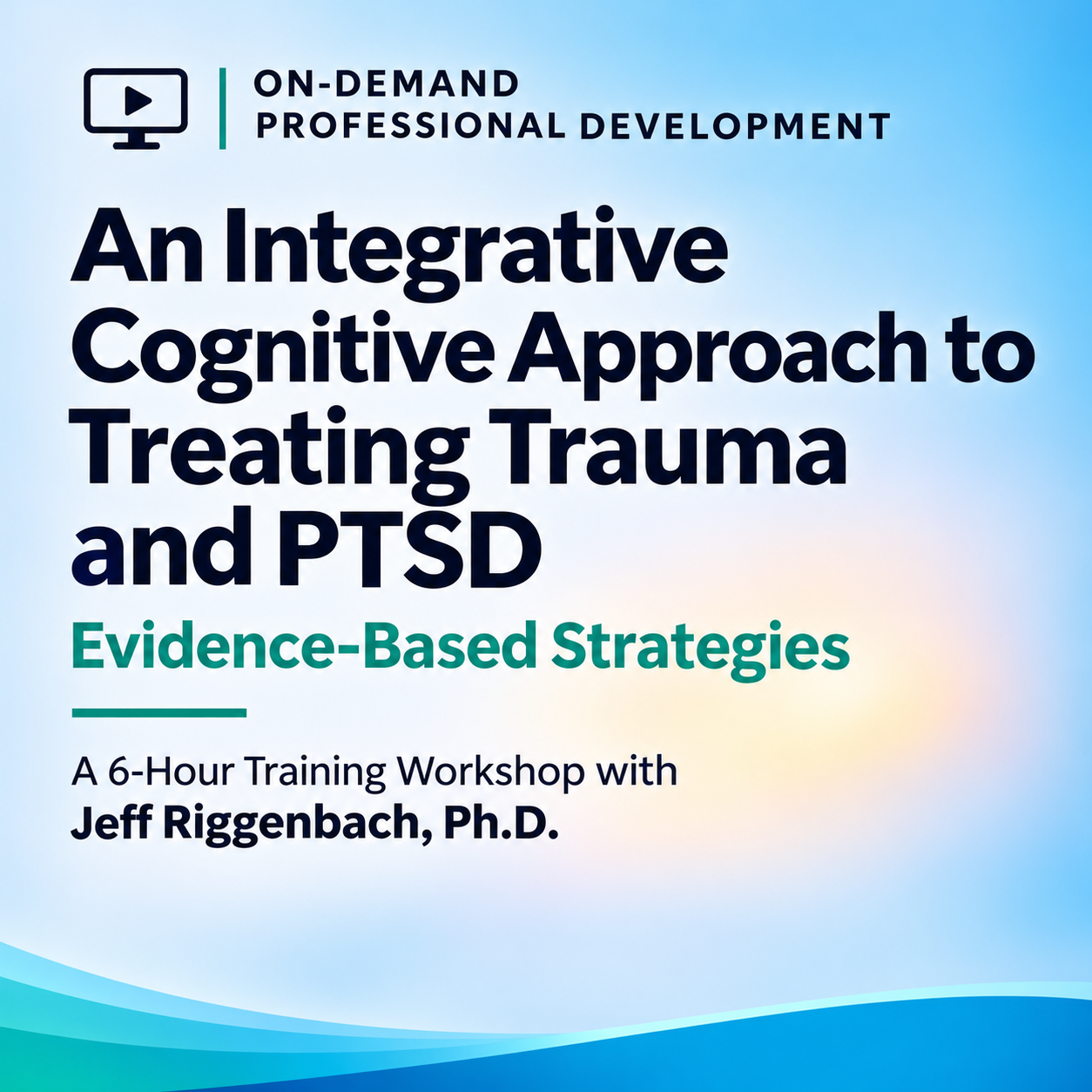
An Integrative Cognitive Approach to Treating Trauma and PTSD: Evidence-Based Strategies
Presented by Jeff Riggenbach, Ph.D.
Format: On-Demand Online Learning
Workshop Overview
Explore an integrated cognitive approach to trauma and PTSD, drawing on established evidence-based therapies and practical strategies for clinical assessment, case conceptualization, and treatment planning.
Cognitive and exposure-based approaches have long been central to evidence-based treatment for post-traumatic stress disorder (PTSD). Cognitive Therapy (CT), Prolonged Exposure (PE), and Cognitive Processing Therapy (CPT) offer established frameworks for helping clients manage trauma-related difficulties.
This six-hour workshop examines the theoretical foundations shared by cognitive approaches and presents an integrated model of treatment. Participants will explore how threat-based appraisals, trauma-related memories, and patterns of avoidance can influence symptom maintenance.
Dr. Jeff Riggenbach emphasizes practical clinical understanding and the thoughtful application of evidence-based strategies to help professionals support clients experiencing trauma and PTSD.
What You’ll Explore
- PTSD & Complex PTSD: Recognizing clinical presentations and understanding relevant distinctions.
- Trauma & the Brain: Understanding trauma-related neurobiology and clinical implications.
- Cognitive Appraisals: Exploring beliefs, schemas, and patterns that sustain distress.
- Evidence-Based Models: Comparing shared principles across CT, PE, and CPT.
- Integrated Treatment: Considering a structured, phased approach to care.
- Recovery & Growth: Supporting coping, acceptance, and post-traumatic growth.
Learning Objectives
Following this workshop, participants will be better equipped to:
- Describe symptoms of PTSD and distinguish them from presentations of complex PTSD.
- Discuss the neurobiology of trauma and its implications for clinical practice.
- Recognize trauma-related schemas and cognitive distortions that contribute to threat-based appraisals.
- Compare common elements of empirically supported cognitive and exposure-based treatment approaches.
- Explain a three-phase framework for supporting clients experiencing PTSD.
- Discuss how triggering cues, negative appraisals, and fragmented trauma memories can contribute to ongoing symptoms.
- Identify modifiable maintenance factors and relevant coping approaches.
- Describe clinical applications of trauma narrative work, nightmare rescripting, acceptance-focused strategies, and post-traumatic growth.
What’s Included With Your Registration
- Six hours of recorded training with Jeff Riggenbach, Ph.D.
- On-demand access until February 1, 2027, to watch and revisit the workshop at your own pace.
- Digital workshop handouts and supporting course materials.
- Certificate of completion after completing the required lessons and passing the course quiz.
- Convenient access to your recording, handouts, and certificate through your Jack Hirose & Associates learning account.
Access deadline: Access is available through February 1, 2027. Complete all required viewing and course activities before access expires. Extensions are not available.
Continuing education: Pre-approved for CEUs. Acceptance varies by professional association; participants are responsible for confirming eligibility with their applicable organization.
Who Should Attend?
This workshop is designed for mental health and helping professionals who want to strengthen their knowledge of evidence-based approaches to trauma and PTSD.
Clinical counsellors, psychologists, psychotherapists, social workers, nurses, occupational therapists, school counsellors, youth workers, mental health workers, addiction specialists, marriage and family therapists, hospice and palliative care professionals, and other helping professionals.
About the Presenter
Jeff Riggenbach, Ph.D., is a speaker, clinical trainer, and three-time bestselling author who has devoted more than 20 years to cognitive approaches to psychotherapy.
He has developed and directed treatment programs in psychiatric hospitals and clinical settings addressing mood disorders, anxiety, substance use, obsessive-compulsive disorder, and borderline personality disorder.
Dr. Riggenbach has trained clinicians throughout the United States and internationally. His popular toolbox book series includes The CBT Toolbox: A Guide for Clients and Clinicians.
He is a certified cognitive therapist and has extensive clinical experience supporting people affected by trauma and addiction across individual, group, and intensive outpatient settings.
Registration & Course Access
Course format: This six-hour workshop is available as an on-demand recording. There is no upcoming live session.
Accessing your course: Sign in to your Jack Hirose & Associates learning account after purchasing to access the workshop through your course dashboard.
Access period: Course access is available until February 1, 2027. Complete all required viewing and course activities before this date.
Certificate of completion: Receive a digital certificate upon completion of the required lessons and successful completion of the course quiz.
Workshop materials: Digital handouts are available through the course. The recording can be viewed online but cannot be downloaded.
Access is intended for the registered participant only and may not be shared. Access extensions cannot be granted.