Individual Online Workshop | 6 Hours of Learning
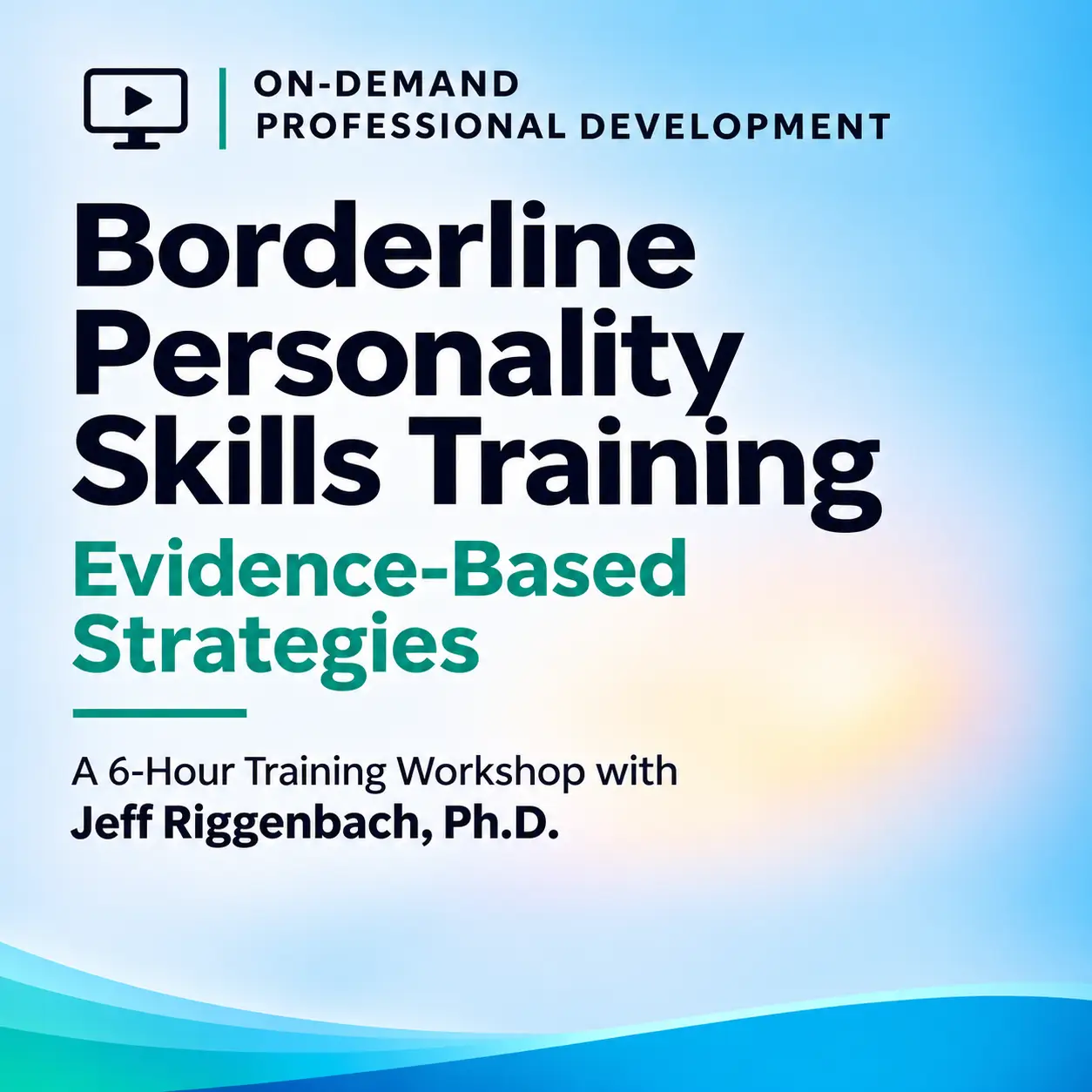
Borderline Personality Skills Training: Evidence-Based Strategies
Presented by Jeff Riggenbach, Ph.D.
Format: On-Demand Online Learning
Workshop Overview
Develop practical approaches to understanding, assessing, and treating borderline personality disorder (BPD). Explore evidence-based strategies drawn from CBT, DBT, and Schema Therapy to strengthen case conceptualization, therapeutic engagement, and treatment planning.
Borderline personality disorder has historically been regarded as one of the more challenging diagnoses to address in clinical practice. However, advances in evidence-based psychotherapy have demonstrated that individuals living with BPD can make meaningful and lasting progress with appropriate treatment.
Dialectical Behaviour Therapy (DBT) has played an important role in transforming how clinicians understand and treat BPD. Today, practitioners can also draw upon Cognitive Behavioural Therapy (CBT), Schema Therapy, and other evidence-based approaches to develop comprehensive and individualized treatment plans.
In this six-hour professional development workshop, Dr. Jeff Riggenbach provides an in-depth exploration of BPD, including diagnostic considerations, case conceptualization, therapeutic engagement, and practical clinical interventions.
Participants will examine how to communicate a diagnosis sensitively, identify patterns contributing to emotional and interpersonal difficulties, and integrate treatment strategies that support collaboration and positive therapeutic outcomes. The emphasis throughout this training is on practical applications that clinicians can incorporate into individual and group therapy settings.
What You’ll Explore
- Understanding BPD: Diagnostic criteria, clinical presentations, and differential diagnosis considerations.
- Therapeutic Engagement: Communicating diagnoses, strengthening collaboration, and supporting therapeutic relationships.
- Case Conceptualization: Developing structured formulations to guide treatment planning and clinical decision-making.
- Integrated Treatment: Combining principles from CBT, DBT, and Schema Therapy in clinical practice.
- Emotional Regulation: Practical skills and group-based approaches supporting emotional awareness and regulation.
- Schema-Based Strategies: Understanding maladaptive schemas and their influence on thoughts, emotions, and relationships.
Learning Objectives
Following this workshop, participants will be better equipped to:
- Describe the nine diagnostic criteria for borderline personality disorder and recognize key differential diagnosis considerations.
- Communicate diagnostic information to clients and family members in ways that support understanding, engagement, and therapeutic collaboration.
- Identify maladaptive schemas and examine how they contribute to patterns of thinking, emotional responses, and behaviour.
- Develop collaborative case conceptualization maps to guide treatment planning, session agendas, and clinical documentation.
- Explain how CBT, DBT, and Schema Therapy can be integrated into a comprehensive treatment approach for individuals with BPD.
- Describe the purpose and clinical applications of emotion regulation and schema-focused groups.
- Apply practical, compassionate, evidence-based strategies to improve therapeutic engagement and support treatment progress.
What’s Included With Your Registration
- Six hours of recorded training with Jeff Riggenbach, Ph.D.
- On-demand access until February 1, 2027, to watch and revisit the workshop at your own pace.
- Downloadable workshop handouts to reinforce learning and clinical application.
- Certificate of completion after completing all required lessons and successfully passing the course quiz.
- Convenient access to your workshop, handouts, and certificate through your Jack Hirose & Associates learning dashboard.
Access deadline: The workshop recording and course materials are available through February 1, 2027. Please complete all viewing and applicable course requirements before access expires. Access extensions cannot be guaranteed.
Continuing education: Eligibility varies by profession and professional association. Participants are responsible for confirming eligibility with their regulatory body.
Who Should Attend?
This workshop is designed for mental health and healthcare professionals seeking to strengthen their understanding and treatment of borderline personality disorder.
Psychologists, clinical counsellors, psychotherapists, social workers, nurses, occupational therapists, mental health workers, addiction specialists, marriage and family therapists, and other helping professionals.
About the Presenter
Jeff Riggenbach, Ph.D., is a speaker, clinical trainer, and three-time bestselling author with more than 20 years of experience specializing in cognitive approaches to psychotherapy.
Throughout his career, he has developed and directed treatment programs in psychiatric hospitals and clinical settings addressing mood disorders, anxiety, obsessive-compulsive disorder, substance use, and borderline personality disorder.
Dr. Riggenbach has trained mental health professionals throughout the United States and internationally, including through educational institutes in Canada, the United Kingdom, Australia, and South Africa.
His bestselling book, The CBT Toolbox: A Guide for Clients and Clinicians, is part of his widely recognized series of practical resources for mental health professionals.
His training emphasizes accessible, clinically relevant strategies that practitioners can apply directly in their work with clients.
Why Choose This Workshop?
- Learn at Your Own Pace: Access six hours of recorded professional development without travel or scheduled attendance.
- Evidence-Based Clinical Approaches: Explore complementary strategies drawn from CBT, DBT, and Schema Therapy.
- Practical Clinical Application: Strengthen your approach to assessment, treatment planning, therapeutic engagement, and emotional regulation.
- Convenient Online Access: Access recordings, handouts, and course requirements through your online learning dashboard.
Registration & Course Access
Course format: This workshop is pre-recorded and available for on-demand viewing. There is no scheduled live session.
Accessing your course: After purchasing, sign in to your Jack Hirose & Associates learning account to access the workshop through your course dashboard. New participants may need to set up their account password.
Access period: The workshop recording and course materials are available until February 1, 2027. Please complete all viewing and applicable course requirements before this date.
Certificate of completion: A digital certificate is available upon successful completion of all required lessons and the course quiz.
Workshop materials: Downloadable digital handouts are provided. Recordings are available for online viewing only and cannot be downloaded.
Online training only. Course access is intended for the registered participant and may not be shared. Access extensions cannot be guaranteed.