Sale!

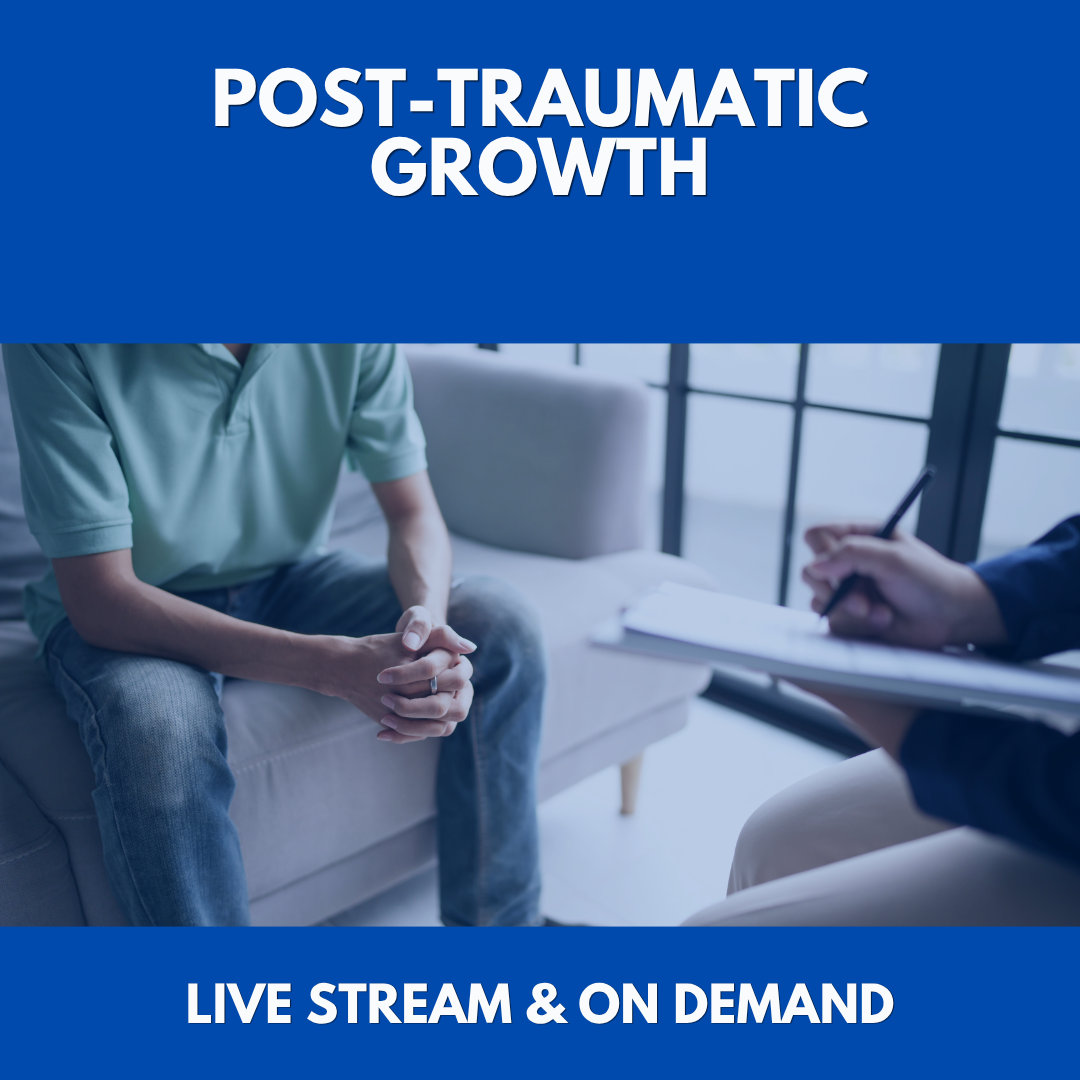
Clinical Interventions for Post-Traumatic Growth: Moving Beyond Trauma Recovery

Original price was: $169.00.Current price is: $59.00.

6 Hours  |   Pre-approved for CEUs

Presenter
Carissa Muth, Psy.D., CCC, R.Psych.
Date
October 8 - 9, 2026
somdn_product_page

LIVE STREAM: October 8 – 9, 2026 from  8:15am – 11:30am PST (Vancouver, BC) Please adjust your start time according to your specific time zone. 

ON-DEMAND: Recorded footage & course content (certificate, videos, quiz) will be available until November 15, 2026. Please allow 1-3 business days for footage to be processed. Extensions cannot be granted under any circumstances.


Trauma doesn’t only wound — for many survivors, the aftermath also becomes fertile ground for genuine transformation. This six-hour training introduces clinicians to posttraumatic growth (PTG): the well-documented phenomenon in which people emerge from adversity with deepened relationships, a renewed sense of purpose, and a fundamentally reorganized understanding of themselves and the world. Participants will move beyond popular notions of a “silver lining” to engage with the actual research base — starting with Tedeschi and Calhoun’s foundational model and the cognitive work of rebuilding shattered assumptions after trauma.

From there, the day turns clinical. Participants will learn to recognize and measure the five domains of growth using validated tools, understand why growth so often coexists with lingering distress rather than replacing it, and rehearse specific techniques — expert companionship, deliberate rumination, narrative and meaning-making work — for supporting growth without rushing or manufacturing it.

The training closes by addressing the ethical tightrope this work requires: how to hold space for authentic transformation while steering clear of toxic positivity, spiritual bypassing, and premature reframing — and how to translate PTG principles into concrete, population-specific treatment planning.
  • Define posttraumatic growth (PTG) and differentiate it from resilience, recovery, and the mere absence of psychopathology.
  • Explain Tedeschi and Calhoun’s theoretical model of PTG, including core belief/schema disruption, the shift from intrusive to deliberate rumination, and the role of disclosure.
  • Identify the five domains of PTG and describe how growth is measured using validated instruments (PTGI, PTGI-X).
  • Analyze the empirical relationship between PTG, resilience, and continued posttraumatic stress symptoms.
  • Apply clinical techniques — including expert companionship, narrative disclosure, and meaning-making interventions — that facilitate growth without minimizing distress.
  • Recognize ethical pitfalls in PTG-oriented work, including premature positivity, spiritual bypassing, and cultural bias.
  • Adapt PTG-informed interventions for diverse populations, including illness, bereavement, combat exposure, and disaster survivorship.
  • Develop a growth-oriented treatment plan that integrates PTG principles alongside ongoing trauma-focused care.
Dr. Carissa Muth is a registered psychologist in Alberta and the Clinical Director at the Sunshine Coast Health Centre and Georgia Strait Women’s Clinic.  She holds Doctorate of Psychology, Master of Arts in Counselling, and Bachelor of Social Work degrees and ran a private practice in Alberta for the last eight years.  Her research to date has focused on attachment theory, systems theory, and family involvement in addictions. With almost a decade of experience in inpatient and outpatient settings, Dr. Muth has provided psychological assessments, therapeutic treatments and conducted research in the field of substance addictions and comorbid psychological disorders. With a passion for learning, she has developed an eclectic understanding of the etiology and treatment of mental health and psychological disorders. Borrowing from this perspective, Dr. Muth integrates a variety of therapeutic modalities in order to provide feedback-informed holistic care to clients.

Clinical Professionals: All mental health professionals including, but not limited to Clinical Counsellors, Psychologists, Psychotherapists, Social Workers, Nurses, Occupational Therapists, Hospice and Palliative Care Workers, School Counsellors, Youth Workers, Mental Health Workers, Addiction Specialists, Marital & Family Therapists, Speech Language Pathologists, Vocational Rehabilitation Consultants and all professionals looking to enhance their therapeutic skills.

Shopping Cart
Scroll to Top