
Virtual Registration Only

This page is for virtual attendance only. Your registration includes access to the event online via live webinar and/or on-demand recording.

To attend this event in person, please register through our In-Person Events website.

Register to Attend
In-Person
In-Person Conference Registration

Included with Your Purchase

✓ Live-stream workshop access

✓ On-demand recording access
✓ Downloadable presentation handouts
✓ Eligibility for certificate of completion

, ,

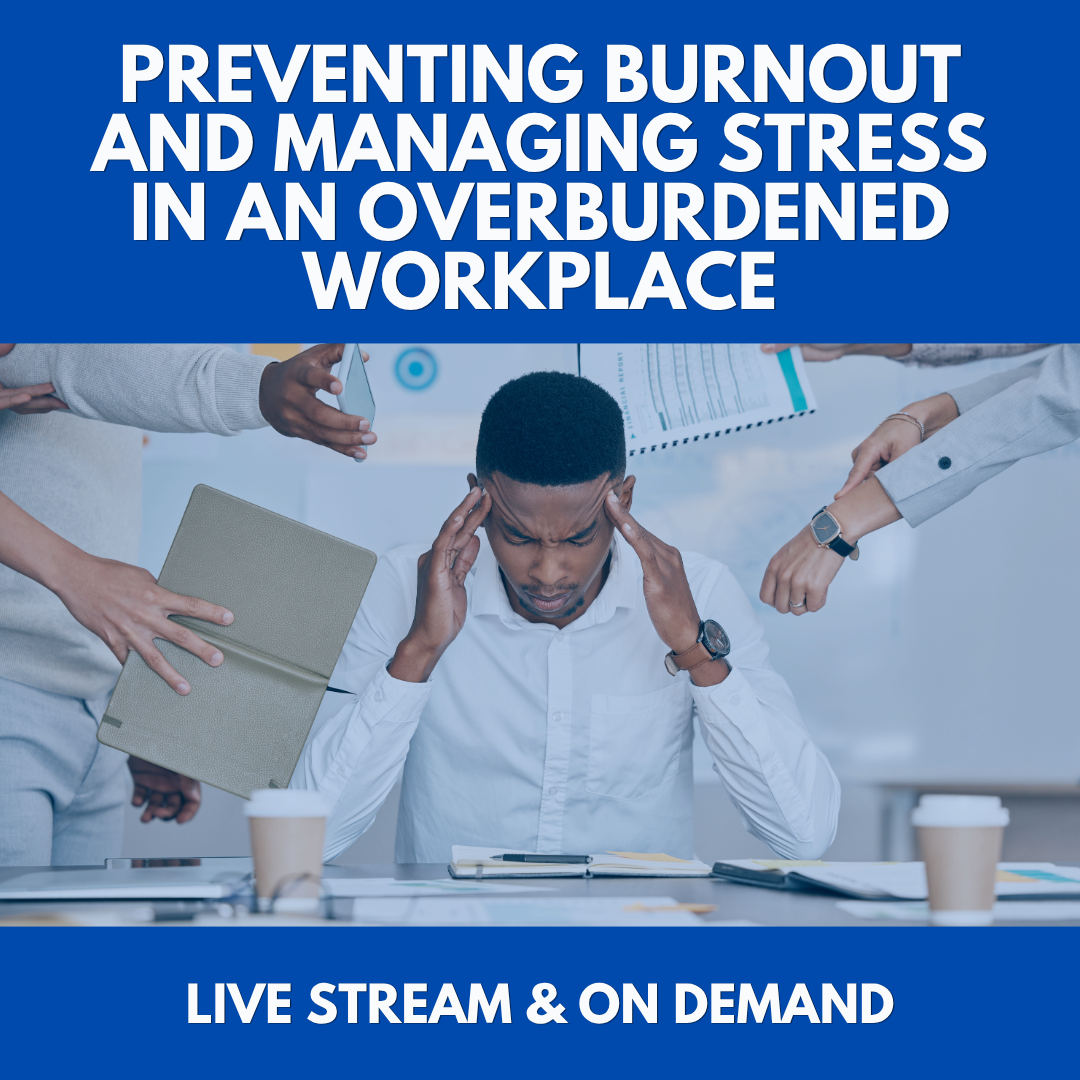
Preventing Burnout and Managing Stress in an Overburdened Workplace

$169.00

6 Hours  |   Pre-approved for CEUs

Presenter
Carissa Muth, Psy.D., CCC, R.Psych.
Date
November 16 - 17, 2026
somdn_product_page

LIVE STREAM: November 16, 2026 from  8:15am – 11:30am and November 17, 2026 from 12:45pm – 4:00pm PST (Vancouver, BC) Please adjust your start time according to your specific time zone. 

ON-DEMAND: Recorded footage & course content (certificate, videos, quiz) will be available until December 28, 2026. Please allow 1-3 business days for footage to be processed. Extensions cannot be granted under any circumstances.


So many of the clients sitting across from us aren’t struggling with a single crisis, they’re worn down by an accumulation of ordinary workdays. The inbox that never empties, the “quick favor” that becomes a second job, the sense that saying no isn’t really an option. As clinicians, we’re often the first place this shows up, long before a client would ever name it as burnout. They come in describing insomnia, irritability, or a vague sense of dread about Monday, and it falls to us to recognize what we’re actually looking at and know what to do with it.

This workshop is designed to sharpen exactly that clinical skill set. We’ll look at how to identify burnout and chronic workplace stress in clients who may present it as anxiety, depression, relational conflict, or physical complaints, and how to distinguish it from other clinical pictures it can resemble. From there, we’ll move into the practical, teachable side of treatment: the time management strategies and interpersonal communication skills you can coach clients through in session so they leave with tools they can actually use at work, not just insight, but something to do differently on Monday morning.

You’ll leave with a clearer diagnostic eye for workplace-related burnout, and a set of concrete, client-facing tools, around boundary-setting, workload conversations, and prioritization, that you can bring directly into your next session.

  • • Define burnout and distinguish it clinically from generalized anxiety, depression, and adjustment disorders that can present similarly.
  • Identify the individual, relational, and organizational factors that most often contribute to burnout in clients from high-demand work environments.
  • Recognize common client presentations of workplace stress and burnout, including somatic complaints, irritability, relational strain, and disengagement.
  • Conduct a clinical assessment of a client’s work-related stressors, coping patterns, and risk of burnout.
  • Teach clients practical time management techniques — including prioritization frameworks, realistic scheduling, and boundary-setting around availability — as part of treatment.
  • Coach clients in interpersonal communication skills, such as assertive requests, active listening, and clear boundary-setting, to reduce workplace conflict and prevent resentment from building.
  • Help clients prepare for and rehearse difficult workplace conversations, such as raising workload concerns with a manager or colleague.
  • Develop a collaborative, individualized treatment plan that supports a client’s long-term resilience rather than short-term symptom relief.
Dr. Carissa Muth is a registered psychologist in Alberta and the Clinical Director at the Sunshine Coast Health Centre and Georgia Strait Women’s Clinic.  She holds Doctorate of Psychology, Master of Arts in Counselling, and Bachelor of Social Work degrees and ran a private practice in Alberta for the last eight years.  Her research to date has focused on attachment theory, systems theory, and family involvement in addictions. With almost a decade of experience in inpatient and outpatient settings, Dr. Muth has provided psychological assessments, therapeutic treatments and conducted research in the field of substance addictions and comorbid psychological disorders. With a passion for learning, she has developed an eclectic understanding of the etiology and treatment of mental health and psychological disorders. Borrowing from this perspective, Dr. Muth integrates a variety of therapeutic modalities in order to provide feedback-informed holistic care to clients.

Clinical Professionals: All mental health professionals including, but not limited to Clinical Counsellors, Psychologists, Psychotherapists, Social Workers, Nurses, Occupational Therapists, Hospice and Palliative Care Workers, School Counsellors, Youth Workers, Mental Health Workers, Addiction Specialists, Marital & Family Therapists, Speech Language Pathologists, Vocational Rehabilitation Consultants and all professionals looking to enhance their therapeutic skills.

Shopping Cart
Scroll to Top