Virtual Registration Only

This page is for virtual attendance only. Your registration includes access to the event online via live webinar and/or on-demand recording.

To attend this event in person, please register through our In-Person Events website.

Register to Attend
In-Person
In-Person Conference Registration

Included with Your Purchase

✓ Live-stream workshop access

✓ On-demand recording access
✓ Downloadable presentation handouts
✓ Eligibility for certificate of completion

, ,

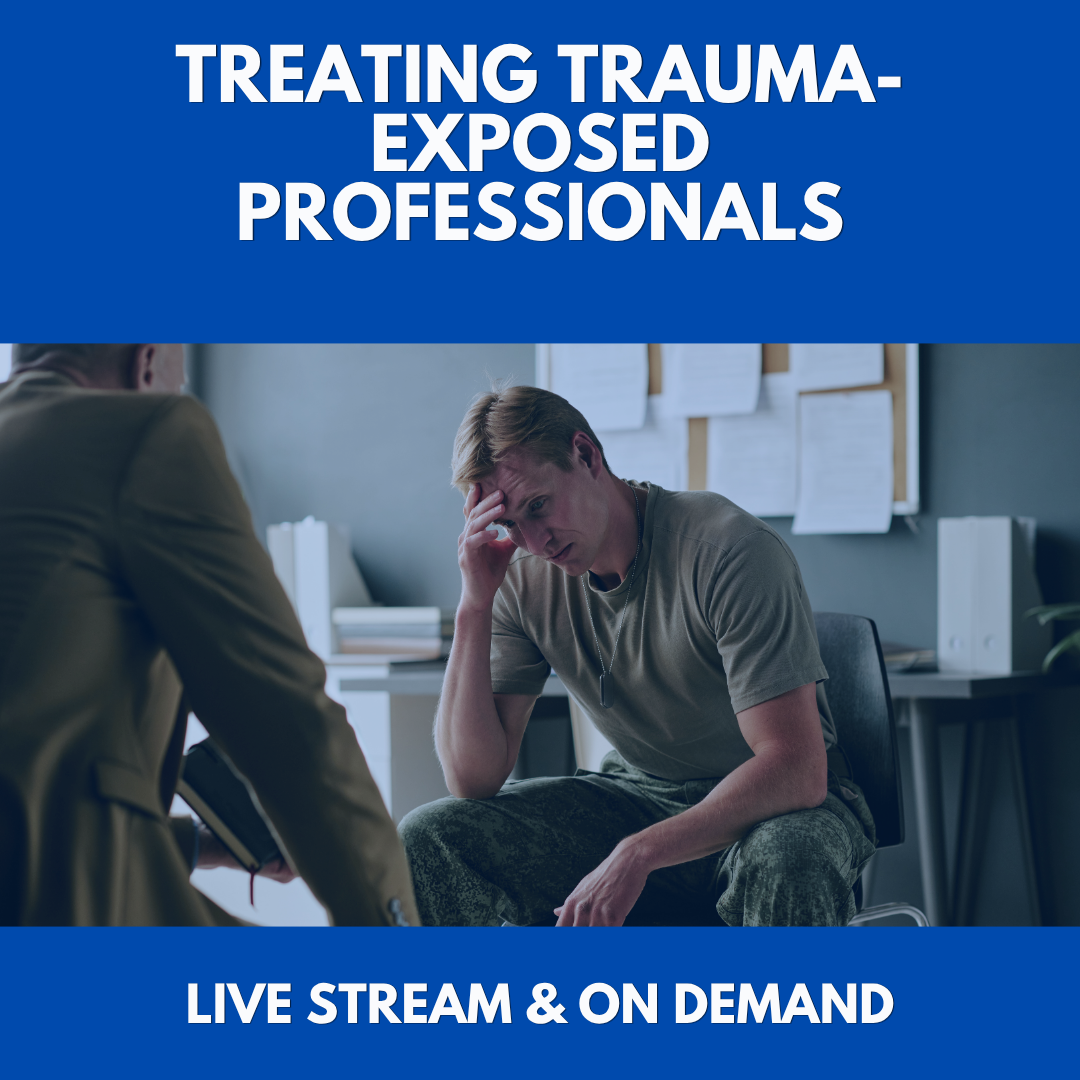
Treating Trauma-Exposed Professionals: Clinical Assessment & Targeted Interventions

$169.00

6 Hours  |   Pre-approved for CEUs

Presenter
Carissa Muth, Psy.D., CCC, R.Psych.
Date
December 17 - 18, 2026
somdn_product_page

LIVE STREAM: December 17 – 18, 2026 from  8:15am – 11:30am PST (Vancouver, BC) Please adjust your start time according to your specific time zone. 

ON-DEMAND: Recorded footage & course content (certificate, videos, quiz) will be available until December 28, 2026. Please allow 1-3 business days for footage to be processed. Extensions cannot be granted under any circumstances.


This intensive six-hour training equips clinicians and helping professionals with the essential skills to identify the unique psychological impacts found in trauma-exposed professionals, such as first responders, healthcare workers, and frontline caregivers. Participants will learn to distinguish the clinical nuances between burnout, compassion fatigue, and vicarious trauma in order to understand the predictable progression of occupational stress injuries and intervene before functioning is compromised.

The course covers the neurobiological and psychological underpinnings of secondary traumatic stress, and provides evidence-based assessment strategies for recognizing the subtle signs of dysregulation and emotional exhaustion that often go unnoticed in high-stress work cultures. Participants will explore practical management techniques and therapeutic interventions designed to mitigate the effects of secondary trauma and restore professional functioning, and will practice applying these tools through case studies and guided exercises.

The session closes with a roadmap for fostering resilience at both the individual and organizational level, enabling therapists to help their clients sustain high-stakes careers while maintaining personal well-being.

  • Differentiate burnout, compassion fatigue, and vicarious trauma using DSM-adjacent clinical criteria and occupational stress injury frameworks.
  • Explain the neurobiological mechanisms (allostatic load, HPA-axis dysregulation, sympathetic activation) underlying secondary traumatic stress in trauma-exposed professionals.
  • Identify the predictable progression of occupational stress injuries, from early dysregulation to functional impairment.
  • Recognize subtle, often-masked signs of dysregulation and emotional exhaustion within high-stress, stoic, or “mission-first” occupational cultures.
  • Apply a minimum of five evidence-based therapeutic interventions for mitigating secondary trauma and restoring functioning.
  • Formulate a clinical case conceptualization for a trauma-exposed client using the frameworks and tools presented.
Dr. Carissa Muth is a registered psychologist in Alberta and the Clinical Director at the Sunshine Coast Health Centre and Georgia Strait Women’s Clinic.  She holds Doctorate of Psychology, Master of Arts in Counselling, and Bachelor of Social Work degrees and ran a private practice in Alberta for the last eight years.  Her research to date has focused on attachment theory, systems theory, and family involvement in addictions. With almost a decade of experience in inpatient and outpatient settings, Dr. Muth has provided psychological assessments, therapeutic treatments and conducted research in the field of substance addictions and comorbid psychological disorders. With a passion for learning, she has developed an eclectic understanding of the etiology and treatment of mental health and psychological disorders. Borrowing from this perspective, Dr. Muth integrates a variety of therapeutic modalities in order to provide feedback-informed holistic care to clients.

Clinical Professionals: All mental health professionals including, but not limited to Clinical Counsellors, Psychologists, Psychotherapists, Social Workers, Nurses, Occupational Therapists, Hospice and Palliative Care Workers, School Counsellors, Youth Workers, Mental Health Workers, Addiction Specialists, Marital & Family Therapists, Speech Language Pathologists, Vocational Rehabilitation Consultants and all professionals looking to enhance their therapeutic skills.

Shopping Cart
Scroll to Top