


Description
LIVE STREAM: June 2, 2026 from 8:30am – 4:00pm (Halifax, NS) Please adjust your start time according to your specific time zone.
ON-DEMAND: Recorded footage & course content (certificate, videos, quiz) will be available until July 13, 2026. Please allow 3 – 10 business days for footage to be processed. Extensions cannot be granted under any circumstances.
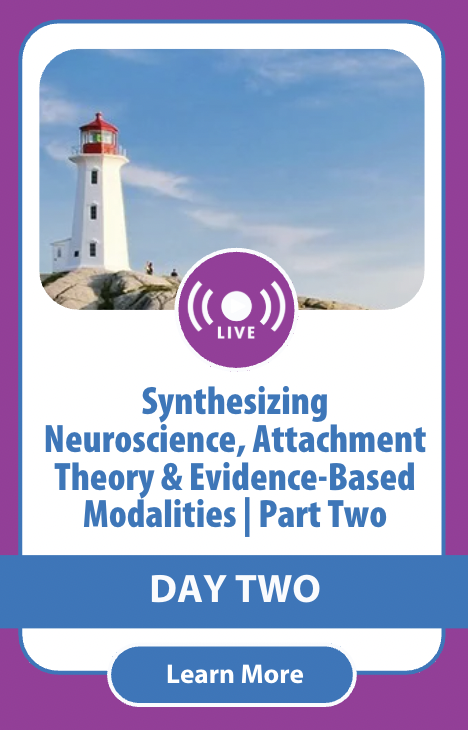
June 2, 2026 | Day Two

Synthesizing Neuroscience, Attachment Theory and Evidence-Based Modalities
Presented by John Arden, Ph.D., ABPP
*Two-Day Workshop – Day 2 (Part 2) This workshop is delivered across two separate conference days.*
This intensive explores a groundbreaking shift in how trauma, anxiety, and depression are understood and treated. It synthesizes research from various fields—metabolism, psychoneuroimmunology, epigenetics, and neuroscience—into an integrated model of mental health care. This model emphasizes the critical connections between the immune system, diet, brain structure, and even gut bacteria, offering a comprehensive vision of how these factors influence mental health and emotional well-being.
A key aspect of the intensive is its focus on clarifying fundamental terms like energy, mind, and self, which have been used ambiguously in both scientific and therapeutic contexts for over a century. By drawing on the latest research, the intensive proposes a more unified understanding of these concepts, offering a more precise framework for mental health professionals. It highlights how the brain’s mental operating networks create and influence our states of mind, which interact in feedback loops to form what we think of as the mind.
Therapists of the 21st century are increasingly expected to play a more holistic role in mental health care, akin to healthcare workers addressing the full range of mind-body-brain interactions. This intensive reflects that shift, encouraging practitioners to expand their toolkit to include an awareness of the body’s physiological processes and how they influence mental health.
The intensive concludes with an exploration of positive psychology and the role of contemplative practices like mindfulness, offering insights into how these approaches can enhance therapeutic work and promote resilience and healing.
Ultimately, this intensive is about rethinking how we approach mental health treatment, integrating a wide array of scientific disciplines to provide a more holistic and effective model for healing.