Description

LIVE STREAM: May 29, 2026 from 8:30am – 4:00pm (Winnipeg, MB) Please adjust your start time according to your specific time zone.
ON-DEMAND: Recorded footage & course content (certificate, videos, quiz) will be available until July 5, 2026. Please allow 3 – 10 business days for footage to be processed. Extensions cannot be granted under any circumstances.
May 29, 2026 | Day Three

Working with Stuck Kids: An Attachment Based Relational Perspective
With over 40 years of experience working in schools, it ads become clear that there are no easy answers for teaching and working with students who have challenging behaviours. The construct of psychological immaturity (not everyone grows up as they get older) has been with us as an intuitive concept for ages, but only recently has developmental science advanced to a state where it can now yield effective strategies and interventions to address learning and behavioural challenges.
Rather than asking, “What can we do to fix this student?” we must, instead develop an understanding of why children get stuck, creating a situation which results in many kinds of challenging behaviours. This understanding comes to us through the neuroscience of development and the research on the effect of adverse childhood experiences (complex trauma) on development, learning and behaviour. It is anchored the attachment-based developmental paradigm developed by Gordon Neufeld, PhD, which considers the keys to human development: maturation, vulnerability and attachment and the role of emotions. This presentation will start with theory and then move on to present a variety of attachment-base and developmentally friendly interventions that have been implemented with success in schools across Quebec. Using this knowledge, it also becomes apparent that some of our “tried and true” interventions are not only ineffective, but they can, at times, make things worse for our students. An Intervention Continuum will be presented that proposes a number of in-class and in-school interventions that are preventative in nature, require minimal additional resources and are applicable at both the Elementary and Secondary levels.
Applying Indigenous Practices to Build Resilience and Strength in Children and Adolescents
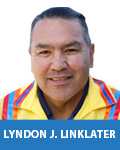
In this transformative full-day workshop, Lyndon Linklater draws on Indigenous worldviews, cultural teachings, and over two decades of experience to illuminate how resilience is nurtured through identity, land, language, and community. Lyndon will guide participants in exploring the historical and contemporary significance of Treaties. This perspective will help attendees deepen their awareness of shared responsibilities and how Treaties influence educational, clinical, and community-based work today.
Participants will explore how children and adolescents carry not only inherited trauma, but also deep inherited strength—rooted in cultural continuity, kinship, and ancestral teachings. Through powerful storytelling, reflection, and practical guidance, Lyndon will support educators, clinicians, and community professionals in fostering environments where Indigenous young people feel valued, grounded, and connected.
Education and Clinical Professionals: All education and mental health or healthcare professionals who work with children or youth including, but not limited to K–12 Classroom Teachers, School Counsellors, Learning Assistance/Resource Teachers, School Administrators, School Paraprofessionals including Special Education Assistants, Classroom Assistants and Childcare Workers • All other professionals who support behavioural challenges and complex learning needs including but not limited to: Nurses, Social Workers, Psychologists, Clinical Counsellors, Family Therapists, Occupational Therapists, Speech Language Pathologists, Addiction Counsellors, Youth Workers, Mental Health Workers, Probation Officers and Community Police Officers.
Eva de Gosztonyi, MA, is a psychologist who has worked for over 45 years in schools across Canada. For 22 years she was the Coordinator of the Centre of Excellence for Behaviour Management, a support to the ten English School Boards of Quebec, helping adults in the school setting provide effective interventions for students with behavioural challenges. Since retiring she has continued to share her expertise with schools in Canada, including First Nations schools and communities, the US, New Zealand, and Singapore. The interventions that she suggests are guided by neuroscience, are trauma-informed and trauma-responsive, and they are attachment-based and developmentally friendly. These interventions have made a difference in the schools in Quebec where they have been used successfully for many years. Eva is on Faculty at the Neufeld Institute and is an authorized presenter of the Neufeld paradigm.
Lyndon J. Linklater is a traditional knowledge keeper and powerful storyteller with an educational background in Indian Social Work, Indian Studies, and law. He is a citizen of Thunderchild First Nation (Plains Cree) in Treaty 6 and has roots in Couchiching First Nation (Fort Frances, Ontario) in Treaty 3.
Lyndon is the longest-serving member of the Office of the Treaty Commissioner’s Speakers’ Bureau, having been appointed in 2000. Over the past two decades, he has spoken to tens of thousands of people, fostering awareness and understanding of Treaty relationships and First Nation worldviews.
Currently, Lyndon works with the Remai Modern Art Museum in Saskatoon as an Indigenous Relations Advisor, where he provides guidance to the board and staff and delivers cultural programming. Renowned for his engaging presence, he weaves First Nation teachings, ceremonial knowledge, and humour into his storytelling, delivering messages that are both insightful and deeply moving.
| Registration | Early bird Fee | Regular Fee |
|---|
| Individual 1 Day Enrollment | $229.00 | N/A |
| 1 Day Group 3 - 7 | $169.00 | N/A |
| 1 Day Group 8 - 15 | $119.00 | N/A |
| 1 Day Group 15+ | $99.00 | N/A |
| | |
| Individual 2 Day Enrollment | $399.00 | N/A |
| 2 Day Group 3 - 7 | $295.00 | N/A |
| 2 Day Group 8 - 15 | $208.00 | N/A |
| 2 Day Group 15+ | $173.00 | N/A |
| | |
| Individual 3 Day Enrollment | $569.00 | N/A |
| 3 Day Group 3 - 7 | $420.00 | N/A |
| 3 Day Group 8 - 15 | $296.00 | N/A |
| 3 Day Group 15+ | $246.00 | N/A |
All fees are in Canadian dollars ($CAD) and per person.
How to Purchase a Group Rate
-
Add Seats to Your Cart
Select the total number of seats you need for your group and add them to your cart. Each seat represents one participant who will be enrolled in the course.
-
Complete Your Purchase
Proceed to checkout and complete the payment for the total number of seats needed for your group.
-
Contact Our Office
Once your purchase is complete, please contact our office at webinars@jackhirose.com with your order number.
-
Receive Group Enrollment Link
We will send you a unique link that you can distribute to group members. Group members will be required to use this link to complete receiving access to the course.
If you have any questions or need assistance, don’t hesitate to reach out.
Fees are per person, seat sharing is not allowed. Please respect this policy, failure to comply will result in termination of access without a refund. For group rates please contact webinars@jackhirose.com