



Description
Bundle and SAVE!
Each webinar can be purchased individually, or save with our discounted 3-day bundle.
This exclusive workshop bundle brings together three live, full-day neuroscience trainings designed for professionals who want a deeper, practical understanding of brain health, mental health, attachment, trauma, and anxiety. Grounded in cutting-edge research and real-world application, these workshops translate complex neuroscience into tools you can immediately use in clinical, coaching, or educational settings.
By registering for the bundle, you receive access to all three live-streamed workshops, plus their corresponding recordings and course materials, allowing you to learn live or on your own schedule.
How Bundle Access Works
- All sessions are 8:30am – 4:00pm PST (Vancouver, BC)
- Attend all three workshops live online
- Receive individual access to each workshop’s recordings and course materials after the live sessions
- Recordings available 1–3 business days after the live event
- Materials remain available until one month after course is aired
- All sessions include certificates, videos, and quizzes
- Please note: Extensions cannot be granted under any circumstances
This bundle offers a cohesive learning journey—from brain health foundations, to attachment and development, to integrated treatment of trauma and anxiety—at a bundled value for professionals committed to neuroscience-informed practice.
Included Workshops & Dates
 1. Planting Seeds for a Healthy Brain and Better Mental Health
March 6, 2026
8:30am – 4:00pm PST
This engaging, evidence-based workshop explores how cutting-edge discoveries in neuroscience can be practically applied to improve client outcomes, motivation, and emotional resilience. Participants will gain insights into neuroplasticity, neurogenesis, and the influence of lifestyle factors such as diet, exercise, sleep, and social connection on brain health and psychological functioning.
With a focus on the SEEDS model—Social engagement, Exercise, Education, Diet, and Sleep—this training empowers professionals to integrate neuroscience-informed strategies into clinical or coaching practices. Topics include managing mood through understanding brain asymmetry, the impact of substances on cognitive function, the default mode network, and the benefits of mindful presence.
COURSE PAGE FOR FULL INFO
 2. The Neuroscience of Attachment: Fostering Resilience and Well-Being in Children, Adolescents and Adults
March 27, 2026
8:30am – 4:00pm PST
This webinar presents information on attachment and wellbeing. We begin with research on Adverse Childhood Experiences (ACEs) studies to highlight the interaction between early adversity and epigenetic effects expressed later in life that significantly impact mental health. The rapidly evolving new research from related fields reveals how gene-environment, metabolism, and immune system interactions effect mental health. For example, maternal neglect and growing up in poverty have been shown to suppress genes regulating the cortisol receptors on the hippocampus, making it more difficult to turn off the HPA axis later in life. In the extreme, low cortisol receptors are associated with suicide.
Therapy with children, adolescents, and adults requires engagement of attachment dynamics and care for their developing brain, and all systems that regulate their body. Therapy to promote resilience taps into the attachment process throughout the life cycle. It requires a mind, body, and brain changing process that transforms dysregulation to the re-regulation of mood, cognition, and resilient behaviors.
COURSE PAGE FOR FULL INFO
 3. Synthesizing Neuroscience, Attachment Theory and Evidence-Based Modalities in the Treatment of Trauma and Anxiety
April 3, 2026
8:30am – 4:00pm PST
The webinar will examine how outcomes are enhanced by using integrated approaches with people who have been plagued by autostress disorders. Just as people with autoimmune disorders suffer from attacks on their bodies by their own immune system, people with anxiety suffer attacks by their stress system on their mind/brain/body. Their anxiety becomes an auto stress disorder wherein their own stress system no longer protects them from danger but alerts them to danger when there is none. Clients with autostress disorders are confused by the symptoms, as well as by different therapists they encounter who ascribe to the various brand-name therapies. Whether a client suffers from free floating anxiety, worry, and panic attacks or is the victim of trauma they need a down-to-earth and integrated approach.
COURSE PAGE FOR FULL INFO
 4. BONUS: Day 1 of The Healing and Treating Trauma, Addictions and Related Mental Health Disorders Conference
April 15, 2026
8:30am – 4:00pm PST
Join leading clinicians and researchers for a two-day virtual conference exploring evidence-informed, integrated approaches to trauma, addictions, and complex co-occurring mental health conditions. This conference brings together neuroscience, psychotherapy, medical perspectives, Indigenous healing frameworks, and skills-based interventions to support effective, individualized care.
This conference is designed for mental health professionals and allied health practitioners. Sessions emphasize practical tools, interdisciplinary collaboration, and contemporary clinical frameworks that move beyond rigid diagnostic models toward holistic healing and long-term recovery.
 Remodeling Mental Health: Combining Multi-Disciplinary Advances
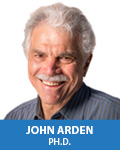
Presented by John Arden, Ph.D.
8:30am – 10:00am (90 minute session)
This session examines the major shift underway in mental health care as traditional diagnostic and treatment models give way to integrated, science-informed approaches. Drawing on advances in neuroscience and multidisciplinary research, Dr. Arden explores how mental health challenges emerge from dynamic interactions among brain networks, biology, environment, culture, and lived experience. Participants will be introduced to emerging frameworks that move beyond siloed therapeutic models toward a cohesive understanding of the brain–body system as an interconnected whole.
MID MORNING BREAK: 10:00AM – 10:15AM
 Post-Traumatic Growth: Healing Emotional & Psychological Trauma
Presented by Carissa Muth, Psy.D.
10:15am – 11:45am (90 minute session)
This workshop introduces clinicians to Post-Traumatic Growth (PTG), a framework that extends beyond symptom reduction to explore how individuals can experience psychological growth following adversity. Distinguishing resilience from growth, Dr. Muth outlines the five domains of PTG and offers practical strategies for supporting meaning-making, narrative reconstruction, and existential inquiry in clinical work. Participants will learn how to compassionately hold space for suffering while fostering transformation and deeper authenticity.
Lunch Break: 11:45AM – 12:30PM
 Conquering Anxiety: Concrete Strategies for Helping Your Anxious Client
Presented by Caroline Buzanko, Ph.D.
12:30PM – 1:30PM (60 minute session)
This practical session provides evidence-based interventions to help anxious clients build an internal locus of control and effectively manage anxiety. Using a transdiagnostic approach, participants will gain specialized tools that go beyond foundational strategies, leaving with a versatile toolbox of concrete interventions applicable across anxiety presentations and levels of severity.
Break: 1:30PM – 1:45PM
 Borderline Personality Skills Training
Presented by Jeff Riggenbach, Ph.D.
1:45PM – 2:45PM (60 minute session)
This one-hour workshop introduces clinicians to skills-based approaches for working effectively with individuals who experience borderline personality features. Drawing on DBT-informed strategies and neurobiological insights, the session explores why traditional insight-oriented interventions often fall short and how targeted skills training can support emotional regulation, reduce impulsive behaviors, and improve relational stability. Participants will leave with clear, teachable tools ready for immediate use in practice.
Break: 2:45PM – 3:00PM
Treating Young Adults with Co-Occurring Mental Health Conditions in an Inpatient Treatment Setting
Presented by Dr. Johann Blignaut, M.B.Ch.B., CCFP & Craig Extine M.A., RCC
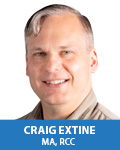
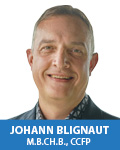
3:00PM – 4:00PM (60 minute session)
This session draws on research and clinical experience in treating young adults (19+) with complex co-occurring mental health conditions in inpatient settings. Presenters explore common presenting issues, unique developmental considerations, and the challenges and advantages of inpatient treatment within mixed-cohort environments. An interdisciplinary treatment approach is discussed, addressing trauma, substance use, addictions (including gambling), mood and anxiety disorders, and significant medical conditions such as persistent pain.